What this costs and how fast we can help
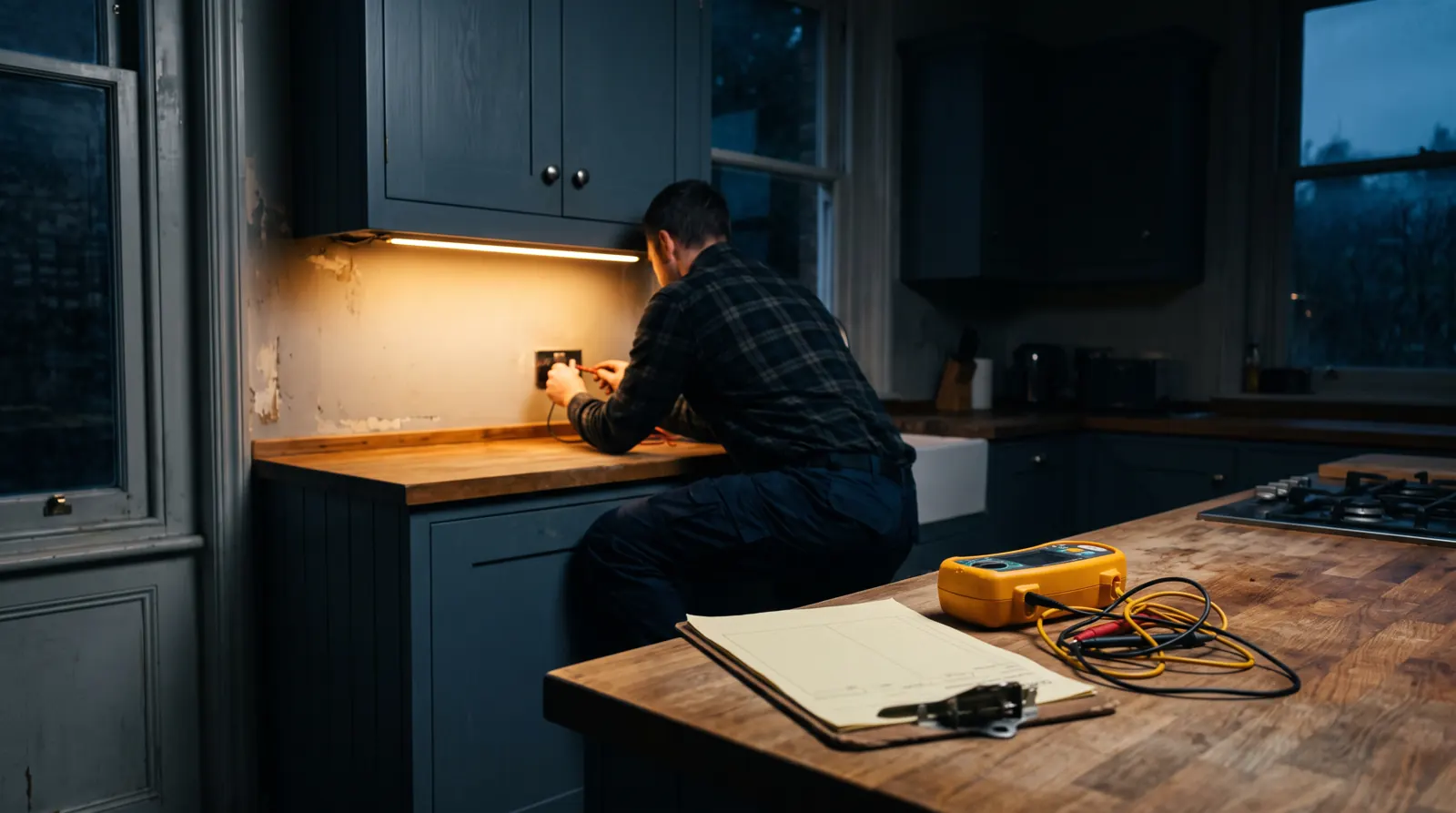
From £120 per hour, we’ll attend quickly to trace faults, make installations safe and restore supply where possible — typically within 1–2 hours for a fault trace.
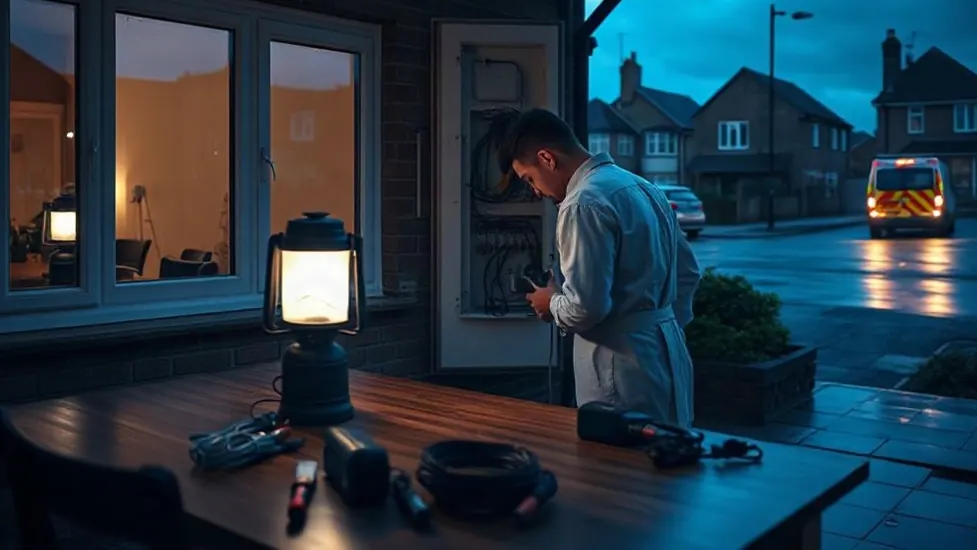
If you’ve lost power in Sturry, call 105 first if the wider network may be affected, then use our 24‑hour emergency line for your installation. Our response times depend on demand and site access, but we’ll prioritise urgent safety issues.
Service and prices: - Fault finding: £80/hour - Emergency call‑out: £120/hour (minimum charge: first emergency hour) - Typical fault tracing: 1–2 hours - Day rate: £600
You’ll know what call‑outs cost before work begins: after the minimum first hour we’ll explain our findings and provide a fixed written price for any repairs. Prices include VAT, labour, parts, testing and certification where required. Plaster repairs, decoration, asbestos removal and DNO supply‑upgrade charges are not included.
Don’t keep resetting protective devices; switch off affected circuits and call us now.
The faults we are called out for most
- Your lights flicker or dim when you put the kettle or toaster on.
-
Usually means a circuit is overloaded or the wiring/connections are failing under load.
-
Certain sockets only work intermittently or cut out when you wiggle the plug.
-
Often caused by calcott or damaged socket connections that need replacing.
-
You notice a burning smell from a socket, switch or fuse box.
-
Typically indicates overheating or a fault in the wiring that needs immediate attention.
-
A socket feels warm or slightly hot to the touch.
-
Usually a sign of a poor connection or overloaded circuit creating heat.
-
You see scorch marks or blackening around a socket or switch.
-
Generally caused by arcing or overheating at the connection point.
-
The consumer unit (fuse box) keeps tripping for no obvious reason.
-
Often a developing fault on a circuit or an overloaded/shorting appliance.
-
Part of the house loses power — lights or sockets stop working in one area but work elsewhere.
-
Usually a blown fuse, tripped breaker on a specific circuit, or damaged wiring in that circuit.
-
Some sockets or lights never seemed to have been upgraded and feel old or calcott.
-
Often indicates ageing wiring or outdated fittings that may not meet current safety standards.
-
You hear buzzing, crackling or popping from a socket, switch or consumer unit.
-
Typically caused by calcott connections or arcing and should be checked urgently.
-
The consumer unit won’t reset after tripping, or trips again immediately.
- Usually points to a persistent fault on the circuit or serious wiring issue that needs isolation and repair.
Safe checks to try before you call
Before calling us, you can safely check for a simple tripped circuit without touching wiring: unplug appliances on the affected circuit, check the consumer unit for a switch in the down position and reset it once, then restore appliances one at a time; if it trips again, leave it off — that helps isolate the circuit and reduce risk to your home.
If neighbours or streetlights are also affected, this may indicate a network supply issue and should be reported to the local distribution network operator; do not assume it is your internal wiring. For plug-in equipment, you may carry out a basic fuse inspection only if the plug is cool, undamaged and removed from the socket; do not open plugs or attempt repairs beyond replacing a fuse if you are competent and it is safe to do so.
Never remove consumer-unit covers, handle exposed cables, or repeatedly reset a tripping switch. If you smell burning, see scorch marks, hear buzzing, or have partial power loss, stop using the circuit and call our emergency line promptly.
Note on legal duties: it is a common misconception that homeowners are legally required to trace and repair all electrical faults themselves — in fact, safety rules require that dangerous electrical work be carried out by a competent person (for example, a registered electrician); you may be expected to arrange for professional repair where the work entails live parts, exposed wiring or consumer-unit access.
Aluminium Wiring Faults in
Don’t ignore these warnings: switch off the affected circuit if safe and call us urgently. Aluminium corrosion and connection overheating can worsen quickly, but we’ll make the installation safe and explain your options clearly.
| Warning sign | Immediate action | Our priority |
|---|---|---|
| Warm socket | Stop using it | Make safe |
| Burning smell | Isolate power | Urgent repair |
| Flickering lights | Avoid the circuit | Secure connections |
We’ll inspect accessible connections, replace damaged components where appropriate, and provide a fixed price in writing before work begins. Never use a warm socket or keep resetting a tripping consumer unit. Our emergency line is available 24 hours, so you’re not left dealing with a potential fire risk alone.
How we trace a fault
We trace a power-loss fault methodically, starting at the consumer unit and testing circuits to pinpoint whether the issue is a tripped protective device, damaged cable, faulty socket or appliance. First, we make the installation safe, isolate affected circuits and check for obvious signs of overheating, water ingress or calcott connections.
We then test systematically rather than guess. Using cable mapping, we identify which sockets, lights and fixed equipment belong to each circuit. Continuity, insulation-resistance and impedance testing help us locate breaks, poor connections and earth-fault risks without unnecessary disruption. We’ll ask what happened immediately before the power failed, including any appliance use or recent DIY work. Once we’ve identified the fault, we’ll explain it clearly, confirm the safe next step and restore power where it’s safe to do so.
What it costs to put right
Most power-loss faults are usually traced within one to two hours at a labour rate of £80 per hour, and we’ll give a fixed written price before any repair starts. Once we’ve identified the cause you’ll know exactly what putting it right costs—no surprise additions.
| Job | Price | What’s included |
|---|---|---|
| Fault finding | £80/hr | Labour, testing, VAT |
| Consumer unit replacement | £500–£700 | Parts, labour, testing, certificate, VAT |
| Partial rewire | £1,200–£3,000 | Parts, labour, testing, certificate, VAT |
Not included: making good plaster or decoration, asbestos removal, DNO upgrades and access equipment.
When it is an emergency instead
Treat a power loss as an emergency if you can smell burning, see smoke or scorching, hear crackling at the consumer unit, or the supply won’t stay on after you’ve unplugged appliances. Don’t keep resetting switches or touch damaged equipment. If it is safe to do so, switch off the main isolator, leave the property and call 999 if there is fire, smoke or immediate danger.
We will support you with calm, practical next steps once emergency services say it is safe. Follow your building’s evacuation procedures, keep everyone away from the affected area and do not re-enter until authorised. Use torches rather than candles; only use emergency lighting if it is installed, operational and safe. Our 24-hour emergency line can arrange urgent electrical attendance to identify and isolate the fault safely.
Note on duties: it is a common misconception that landlords, occupiers or electricians always have an immediate legal duty to make repairs on the spot; in an emergency the primary legal duty is to ensure safety (for example by evacuating and contacting emergency services) and to arrange for competent persons to carry out any necessary electrical work as soon as reasonably practicable.
Older wiring around Sturry
Older wiring in Sturry can be more than a simple nuisance, particularly in the town centre and the Victorian terraces around Broad Oak and Calcott, where rubber‑insulated (VIR) cable fitted in the late 19th and early 20th centuries may still be present.
We provide a fixed written price for the work at the address concerned before we start, so homeowners in Sturry can act quickly with confidence.